
Part of being a biologist is the constant need to learn new things. Sometimes that means mastering a new statistical analysis or setting up moose collars. In the case of today’s installment of “Moose Browse,” it’s snowmobiling. Despite growing up in Wisconsin, snowmobiling was brand new to me, and I was excited to learn in such a unique way.
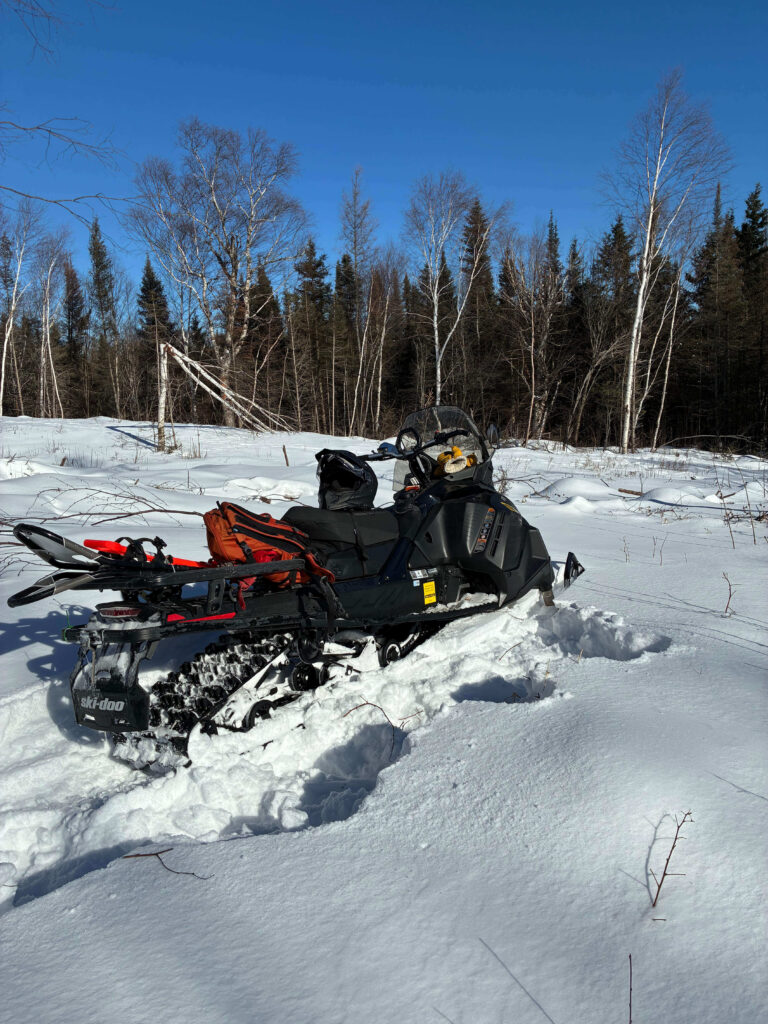
As you might expect, moose take us to some pretty remote locations when doing field necropsies, cluster visits, or health checks. Here at the Northern Moose Alliance, snowmobiles are a critical tool for navigating moose range and getting our work done.
This has given me the opportunity to ride in beautiful places across northern Minnesota…and the equally important but not as fun opportunities to learn exactly how to unstick a sled buried in three feet of powder!
Tracking in the Field
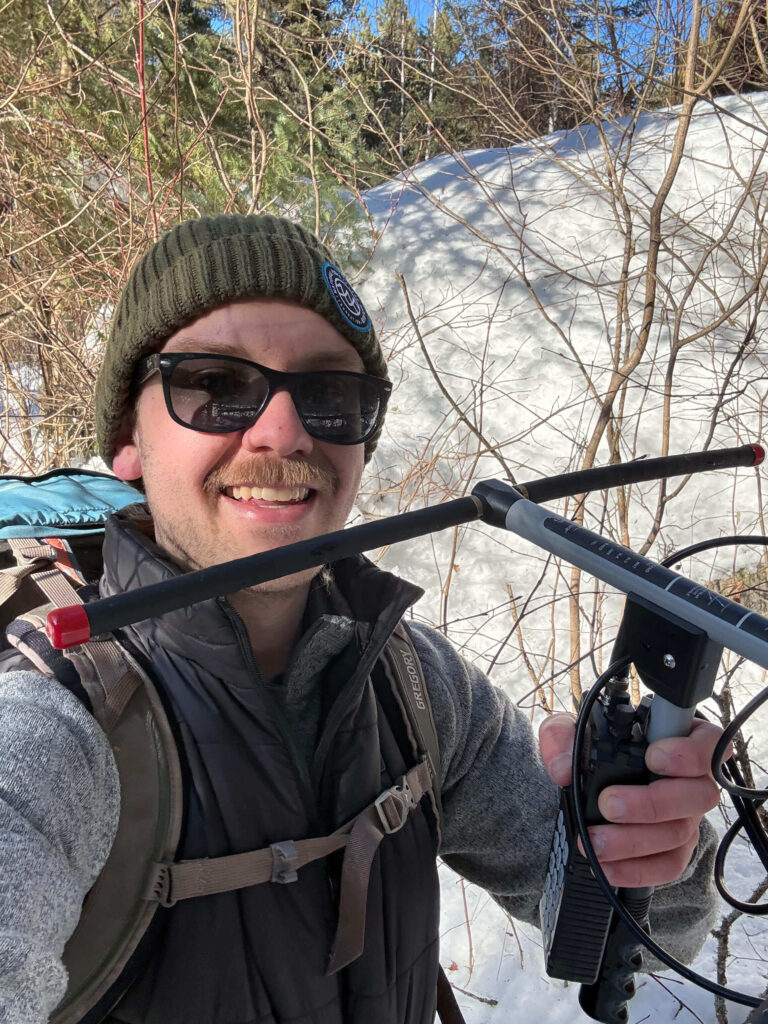
Tracking the moose using radiotelemetry
Lately, my adventures have taken me across moose range, including the reservation lands of the Grand Portage Band of Lake Superior Chippewa and other areas of the 1854 ceded territory.
These trips often start with the recent GPS locations of a moose that we suspect may be sick, injured, or whose collar may be acting up. Once we head inland to the general area, we use radio telemetry to "track in" with the goal of getting eyes on the animal.
This visual check allows us to assess whether the animal looks injured, sick, or is just resting in a good spot. Sometimes a visual is impossible. In those cases, we listen to the telemetry signal to see if we "pushed" the moose.
A healthy moose will usually make a clear, intentional movement away from its bed site once it hears us. Even without seeing the animal, we can tell it's leaving based on the shifting strength and direction of the radio signal. Without snowmobiles, it would be impractical to access many of these locations for the duration of the winter.
The "Moose Taco"
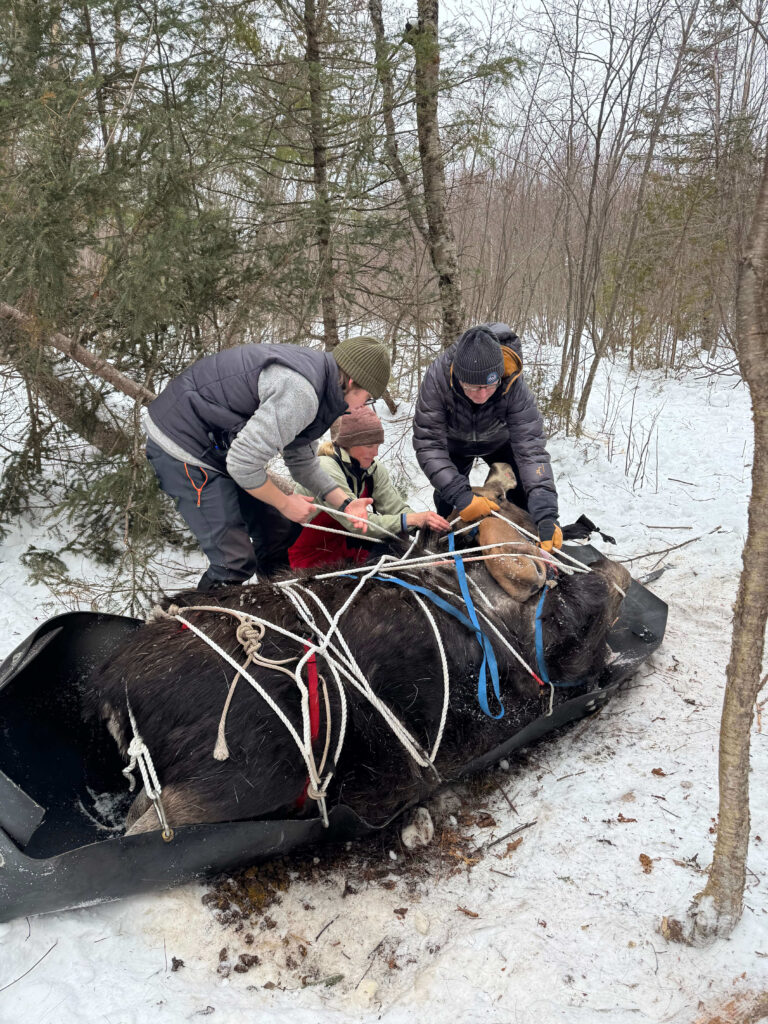
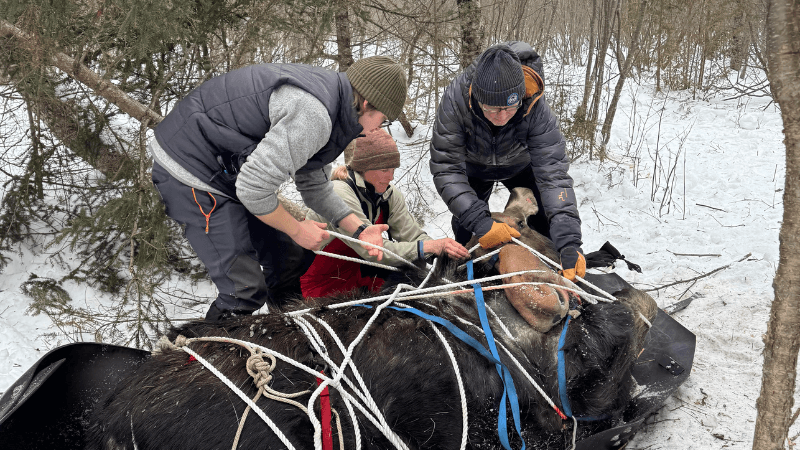
Tom (NPLSF), Dawn (MNDNR), and me packaging a moose onto the moose taco.
One of the more unique parts of the job is when we must extract a moose carcass from the field so that we can get it to the veterinary diagnostic lab for a full lab necropsy. To do this, we use what we call a "moose taco." It’s essentially a large piece of conveyor belt material that we’ve fashioned with grommets, carabiners, rope, and a hitch.
We "package" the carcass inside to pull it out of the field. As you can imagine, moose are incredibly heavy. Depending on the snow conditions, we sometimes run our snowmobiles in tandem to safely pull the weight without damaging our equipment.
Getting comfortable on snowmobiles is just one example of what I’m sure will be a long list of new skills I learn in my position as a moose biologist with the National Parks of Lake Superior Foundation and the Northern Moose Alliance.e research team a mortality alert that includes the collar ID, the time that movements stopped, and the location of the collar.
Stay tuned and remember to check the Moose Alliance website for more behind-the-scenes looks at moose research in Minnesota.
About "Moose Browse"
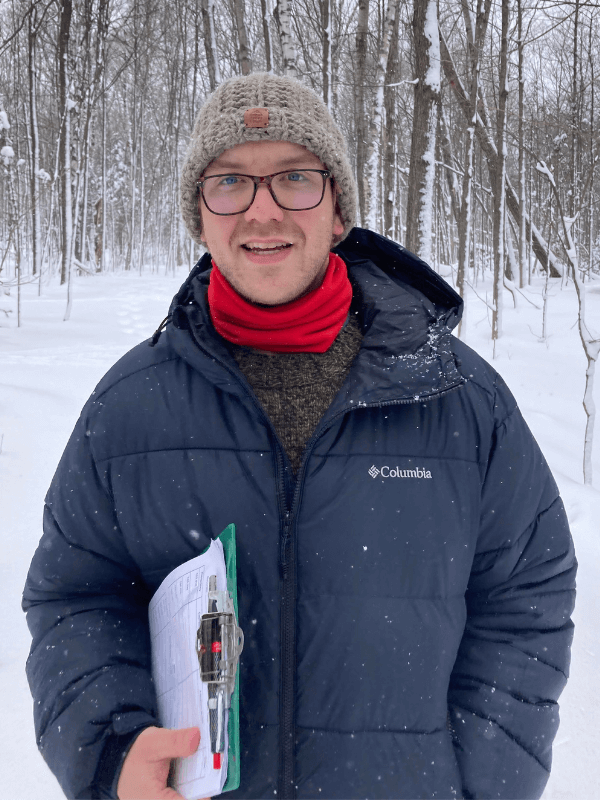
Updates From the Field with Moose Researcher Adam Mortensen
“Moose Browse” offers a look behind the scenes at moose research in action. Here, we share regular updates that include descriptions of specific tasks we’re trying to complete, tales from the field, a look at the wide range of gear moose biologists use, and anything else that we think makes wildlife research exciting.
About the Author
Stay Connected To Moose Research
This work depends on more than scientists in the field. It depends on informed, engaged people who care enough to stay connected.
We’d love to keep you updated as this work evolves and share ways you can help protect moose as opportunities arise. Please join our quarterly newsletter for exclusive updates, expert moose insights, and actions you can take.
Interested in contributing directly to the research? Visit our Citizen Science Portal to share trail-camera photos or videos that can help researchers assess possible winter tick-related hair loss and better understand moose health across the northeastern range.
Interested in staying connected in other ways, too? Explore resources built for the field and the community, including Moose Safety and Viewing Etiquette plus a social-media toolkit.