
Prepping for captures:
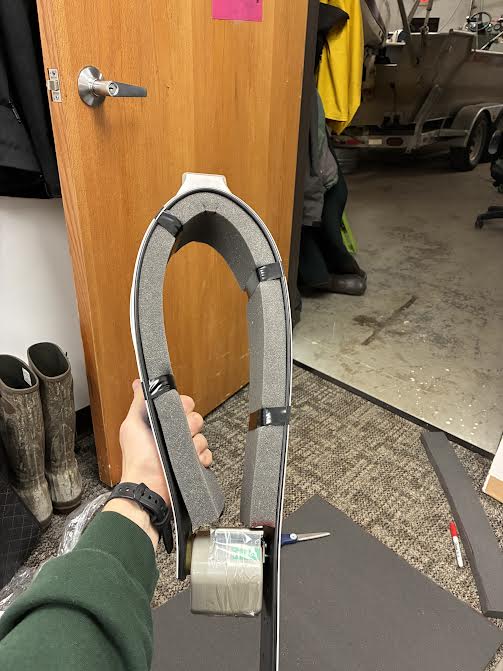
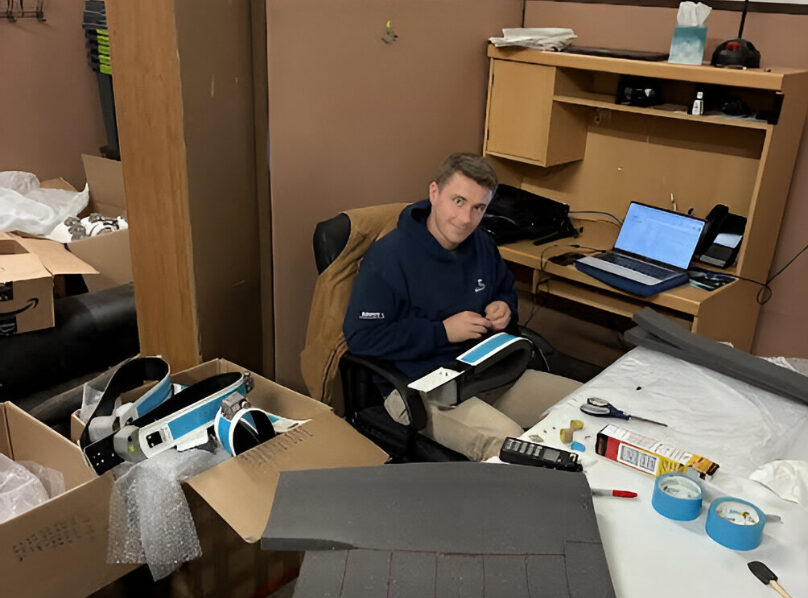
Moose captures for the joint MNDNR/1854 LCCMR (Legislative-Citizen Commission on Minnesota Resources) funded project won’t begin until January, and Grand Portage captures follow soon behind. The prep work, however, is already in full swing. We’ve been busy pulling together capture kits and preparing the collars.
You might notice the bright blue tape in the photos. Each year, we will choose a new color of tape for the collars allowing us to identify exactly which year a moose was collared during our aerial surveys. This is a technique that Grand Portage has used for many years and has been very effective when prioritizing which moose to target for recapture.
Accounting for growth:
You may have also noticed the foam in the pictures. One of the trickier parts of collaring juvenile moose is that they aren’t fully grown, and we need a collar that is snug enough that it won’t fall off, but not so tight that it will cause problems as the animal grows. We addressed this by lining the inside of the collars with foam to provide a snug, comfortable fit for younger moose. As the animal grows, the foam will compress and deteriorate creating space for their widening necks.
Final tests:
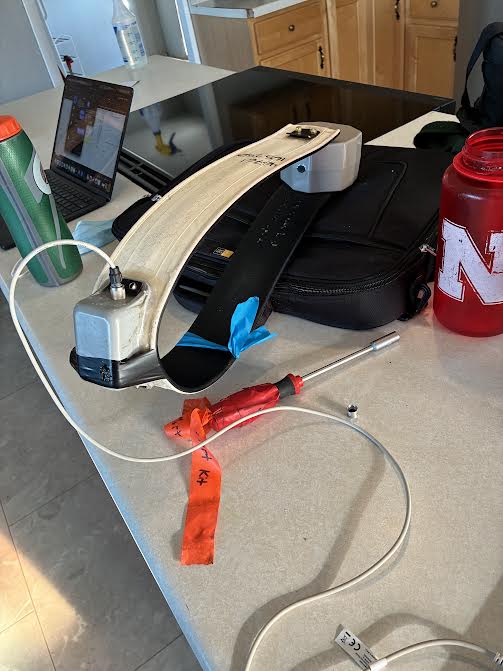
The collars must pass a few tests before they can be deployed on any moose:
- GPS: Is the collar connecting to the satellites and taking locations?
- VHF (Very High Frequency): Can we hear the telemetry signal on our receivers?
- Mortality mode: Does the collar send the research team an alert when it switches to mortality mode?
To test these, we leave the collars outside overnight. If the collar stays stationary for over six hours, it is programmed to send the members of the research team a mortality alert that includes the collar ID, the time that movements stopped, and the location of the collar.
Stay tuned and remember to check the Moose Alliance website for more behind-the-scenes looks at moose research in Minnesota.
About "Moose Browse"
Updates From the Field with Moose Researcher Adam Mortensen
“Moose Browse” offers a look behind the scenes at moose research in action. Here, we share regular updates that include descriptions of specific tasks we’re trying to complete, tales from the field, a look at the wide range of gear moose biologists use, and anything else that we think makes wildlife research exciting.
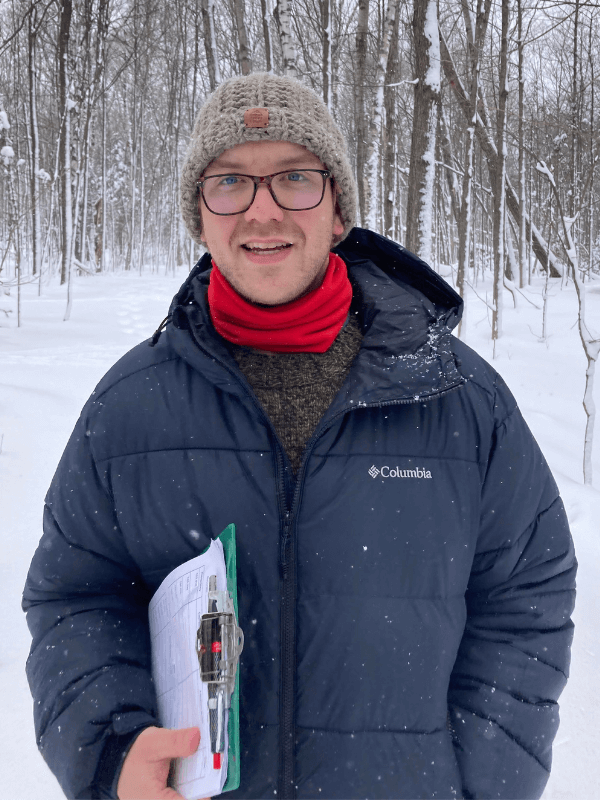
About the Author
Stay Connected To Moose Research
This work depends on more than scientists in the field. It depends on informed, engaged people who care enough to stay connected.
We’d love to keep you updated as this work evolves and share ways you can help protect moose as opportunities arise. Please join our quarterly newsletter for exclusive updates, expert moose insights, and actions you can take.
Interested in contributing directly to the research? Visit our Citizen Science Portal to share trail-camera photos or videos that can help researchers assess possible winter tick-related hair loss and better understand moose health across the northeastern range.
Interested in staying connected in other ways, too? Explore resources built for the field and the community, including Moose Safety and Viewing Etiquette plus a social-media toolkit.