Northern Moose Alliance
Citizen Science Pilot
The Northern Moose Alliance is seeking photos from trail cameras across the northeast moose range to help document the potential effects of winter ticks on moose health and survival. Photos that contain a side profile or a quartering to- or-away angle of a moose are ideal to allow us to score the amount of hairloss.
The most critical period of health impacts from winter ticks occurs between March 15 and May 15, annually. Given we had two consecutive mild winter preceding this year, we are expecting moose to have heavy tick loads which causes them to rub off their fur and this behavior intensifies in late winter. By understanding the impact of winter ticks on moose across the northeast landscape, we hope to learn if there are places where forest management may reduce this burden.
Please be sure to include a date stamp on your photo or video.
Moose recovery depends on more than scientists in the field — it depends on informed, engaged people who care enough to help. When you share a moose trail photo or video, you’re strengthening the research that protects Minnesota’s northern wild.
If you have any questions about participating in the research, please get in touch with us at info@moosealliance.org. You can learn more about the research here.
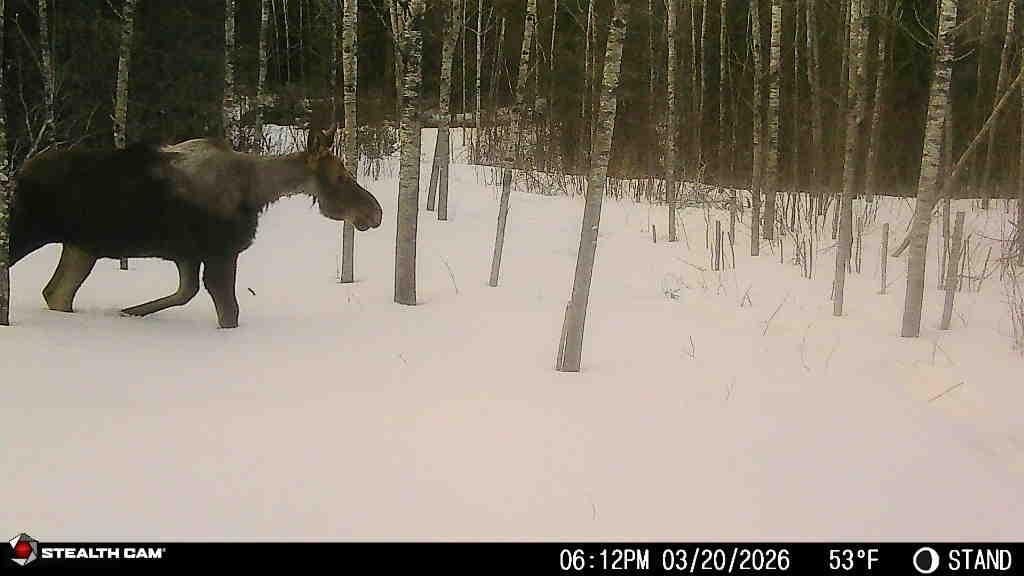
Reference Example: An Ideal Angle For Assessing Tick-Related Hair Loss
This example shows the type of image that is especially helpful for researchers. The most useful photos usually show most of one side of the moose’s body — not just a head shot — so researchers can better assess coat condition and possible hair loss.
Please be sure to include a date stamp on your photo or video.
If you have video of a moose and are not sure which angle is best, please upload a video clip and we’ll choose the best image from it.
Example
Description: This trail-camera image shows a moose in a clear side profile while walking through the snow, with visible hair loss along the body.
Why this is an ideal shot: It captures most of one side of the moose — including the shoulder, flank, rump, and upper legs — which gives researchers a strong view for assessing coat condition and the extent of possible winter tick-related hair loss.
How to Upload
To participate, please submit trail camera footage or photos of one or more moose using the Google form linked below and include the date and a location (either coordinates or TRS/Township). If you don’t know your TRS, use this app to easily convert coordinates or find your location: https://maps.dnr.state.mn.us/compass/mobile/
- We are looking for all moose sightings and not just collared moose, though collared moose sightings are a bonus.
- We need to see most of the side of a moose, not just a head shot.
- If you're unsure which angle works best and have video footage, feel free to upload a video clip — our team can select the most useful frame.
Please upload trail videos and photos via our Google Form here.
If anything doesn’t work as expected, please contact Technical Support. Your feedback helps us improve this upload tool for a post-pilot version.
Moose Footage/Photo Guide
While we’re primarily seeking trail camera footage of moose, we also welcome submissions taken on phones or professional cameras.
This guide offers practical tips for capturing clear, research-friendly photos and videos, with a focus on winter tick research. It includes example images plus both trail cam tips and advice for taking images from the trail.
Public Moose Map
Stay tuned for a map available to the public to display a subset of approved submissions. Make sure you subscribe to our email list.
Subscribe For Updates
Get updates as this pilot evolves and be the first to hear about future public-facing tools and research opportunities.